Author: George@quokkaprints.com

  • Custom Wine Glasses: A Buyer’s Guide for Wineries, Weddings & Events

    Custom Wine Glasses: A Buyer’s Guide for Wineries, Weddings & Events

    Custom Wine Glasses: A Buyer’s Guide for Wineries, Weddings and Events

    Custom wine glasses do double duty: they elevate the pour in the moment and carry your name home on the shelf afterward. Whether you run a tasting room, plan weddings, or organize corporate events, a branded glass is the rare keepsake guests genuinely use rather than store away. But the category hides more choices than most buyers expect, from stem shape to glass quality to how the logo is applied. This guide walks through the decisions so you can spec custom wine glasses that look refined and survive real use.

    Stemmed vs. Stemless: Match the Setting

    The first fork is stemmed versus stemless, driven by formality and durability. Stemmed glasses keep a hand off the bowl so wine stays at temperature, and they read classic and elegant, which suits tasting rooms, weddings and upscale receptions. Stemless glasses are sturdier, stack and store easily, and resist tipping, making them the practical pick for outdoor events, high-volume pours and casual venues. Many programs carry both: stemmed for the seated dinner, stemless for the patio and the gift shop.

    As a rule of thumb, choose stemmed for elegance and aroma, stemless for durability and easy handling. If you can only stock one for a mixed crowd, stemless survives the night better.
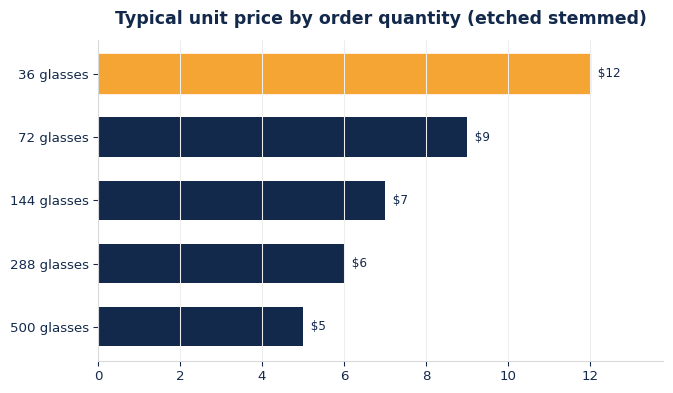
    Typical unit price for custom wine glasses by order quantity.
    Typical unit price for an etched stemmed glass as order quantity increases.

    Decoration: Etching, Printing and Color

    How the glass is decorated sets its whole character. Deep sand or laser etching leaves a permanent frosted mark that never fades or washes off, which is why it is the top choice for winery logos and engraved wedding dates. Full-color printing (screen, pad or UV) puts vivid multi-color artwork on the glass and is the workhorse for event branding and bold logos. Fired-on ceramic enamel bonds color permanently for dishwasher durability. For weddings, etching the couple’s names and date onto matching glasses turns stemware into a genuine favor.

    Which to pick

    For a permanent, understated luxury look, choose etching. For bright multi-color logos at volume, choose printing. The most memorable orders often combine a printed brand color with an etched name, so the glass feels bespoke rather than mass-produced.

    Glass Quality and Sizing: Fit the Varietal

    Glass quality and bowl size shape both the experience and the perception. Lead-free crystal (crystalline) glass is thinner, clearer and more brilliant, signaling premium; standard soda-lime glass is thicker, tougher and more economical for high-volume events. Bowl size should follow the pour: a larger, rounder bowl suits reds by letting them breathe, a smaller tulip bowl concentrates aromatics for whites, and an all-purpose bowl around 12 to 15oz covers a mixed service without a cabinet full of shapes.

    Glass style Best for Notes
    Large-bowl stemmed Reds, tasting rooms Aeration, elegant look
    Tulip stemmed Whites, sparkling Concentrates aromatics
    All-purpose stemmed Mixed service, weddings One shape, versatile
    Stemless tumbler Outdoor & high-volume events Sturdy, stackable
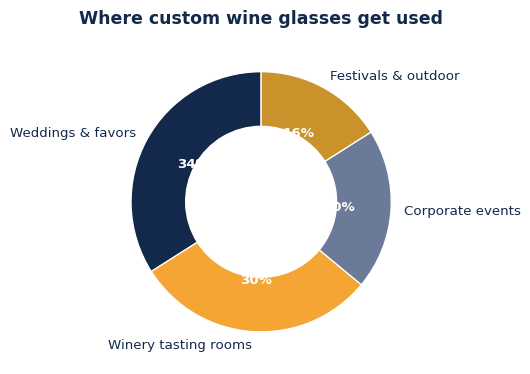
    How custom wine glass orders split across use cases.
    How branded wine glass orders typically split across use cases.

    Quantity, Pricing and Lead Time

    Per-glass price falls as volume climbs, because decoration setup (etch files or print screens) is a fixed cost spread across the run. Deep etching and multi-color printing cost more per unit than a single-color mark, and crystal bodies carry a premium over soda-lime. Treat any figure as an illustrative range rather than a quote, since glass quality, bowl size and decoration complexity all move the number.

    Standard production commonly lands in a two-to-four-week window after art approval, with rush options at a premium. For a dated wedding or event, work backward from the day and build in a week of buffer for a physical proof, since etch depth and placement look different on curved glass than on a flat mockup.

    Tip: Order 5 to 10 percent over your guest count. Wine glasses break, and a modest overage covers losses during service and gives you spares for the head table or a display, without a costly rush reorder mid-event.

    Matching the Glass to the Occasion

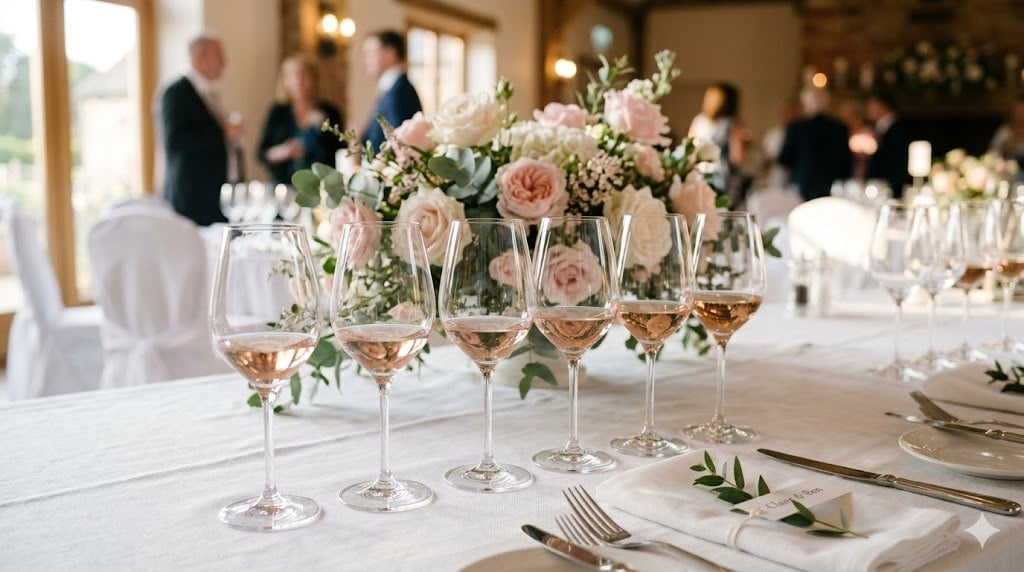
    The right spec shifts with the event. For a winery tasting room, etched stemmed glasses in your house style reinforce the brand with every pour and sell well in the gift shop. For a wedding, all-purpose stemmed glasses etched with names and the date become favors guests keep for years. For corporate events and galas, a tasteful etched or printed logo on a quality glass signals care. For outdoor festivals and high-volume pours, stemless glasses hold up to crowds and stacking far better than delicate stems.

    Think about what happens after the event. A well-made branded glass gets used at home and keeps your name in view, which is worth more than a slightly cheaper glass that gets left behind or broken the same night.

    Common Mistakes to Avoid

    A few predictable errors undercut otherwise good orders. The first is choosing delicate crystal stems for a rowdy outdoor event where stemless would survive. The second is oversizing the logo until it overwhelms an otherwise elegant glass. The third is skipping the physical proof on etched work, then finding the mark is too shallow or off-center. Finally, buyers order exactly to headcount and have nothing left after the inevitable breakage, then pay a premium to rush a small reorder in the middle of an event. A little planning on quantity is far cheaper than an emergency top-up.

    Confirm your glass style, decoration method and quantity early, add a breakage buffer, and reserve production time before peak wedding and holiday event season when turnaround times stretch.

    The Bottom Line

    The best custom wine glasses come from three aligned decisions: pick stemmed or stemless based on formality and durability, choose etching or printing to match whether the glass is a keepsake or a branded run, and size the bowl to the wine and the setting. Plan quantity with a breakage buffer, mind lead time so pricing works in your favor, and always approve a proof on etched work. Do that and you get glasses guests raise, keep and use long after the event. A branded glass that earns a spot in someone’s cabinet keeps advertising your winery or celebration for years, turning a single event purchase into a durable, everyday brand impression.

    Ready to design your custom wine glasses?

    Send us your logo or event details, glass preference and quantity, and we will recommend a style, decoration method and timeline that fits your winery, wedding or event.

    Get a Quote

    More reading: browse our full range or learn how we produce custom wine glasses. Questions on artwork or quantities? ask for a quote.
  • Stemmed vs Stemless: A Practical Buyer’s Guide for Custom Wine Glasses

    Stemmed vs Stemless: A Practical Buyer’s Guide for Custom Wine Glasses

    The stemmed-vs-stemless debate gets framed as a question of style. It’s actually a question of use case. Sommeliers prefer stemmed for specific physical reasons. Casual entertainers reach for stemless for equally specific practical ones.

    Why Stemmed Glasses Exist

    • Temperature control. Holding the bowl warms the wine. The stem gives you a place to hold without transferring heat.
    • Aroma. The bowl shape concentrates aromatics toward the rim.
    • Swirling. A stem gives you leverage to swirl wine without sloshing.
    • Visual presentation. A clear bowl on a thin stem shows off color and clarity.

    Why Stemless Glasses Caught On

    • Durability. No stem means nothing to snap in the dishwasher.
    • Storage. Stemless glasses stack and store more efficiently.
    • Casualness. They feel less precious, so they get reached for on a Tuesday night.
    • Dishwasher friendly. Most stemless glasses survive dishwashing better than thin-stemmed.

    Use-Case-Based Recommendations

    • Wedding gifts: Stemless tends to win.
    • Formal corporate gifts: Stemmed reads more premium.
    • Restaurant by-the-glass: Depends on the concept.
    • Outdoor events: Stemless or insulated wine tumblers.
    • Wine clubs: Stemmed for tasting.

    A Simple Decision Framework

    When in doubt, ask: Will the recipient use this for special occasions or everyday? Hand-washed or dishwasher? Formal or modern? Special occasions, hand-washed, formal: stemmed. Everyday, dishwasher, modern: stemless.

  • Restaurant Branding 101: Why Custom Glassware Lifts Average Ticket Size

    Restaurant Branding 101: Why Custom Glassware Lifts Average Ticket Size

    Restaurants spend serious money on the visible parts of the brand — the logo, the menu design, the website, the storefront. The glassware on the table usually gets less attention. That’s a missed lever. Custom glassware is one of the highest-touch, longest-lingering brand surfaces in a restaurant, and operators who get it right tend to see it show up in unexpected places: social posts, repeat visits, and even average ticket size.

    Glassware Is the Most-Touched Brand Surface

    Think about how a guest interacts with your restaurant during a typical meal. They look at the menu once, maybe twice. They scan the room when they walk in.

    The glass in their hand? They touch it dozens of times. They lift it, sip from it, set it down, photograph the table with it in the frame. If that glass is generic, you’ve handed your guest a branded experience interrupted by a beige object. If it’s custom — even subtly — your logo or mark is in their hand and in their photos for the duration of the meal.

    How Custom Glassware Influences Ordering Behavior

    There’s a behavioral element here too. The vessel signals the value of what’s in it. A craft cocktail served in a generic Libbey rocks glass reads as casual. The same cocktail served in a custom-branded coupe with your logo on the base reads as intentional, signature, and worth the price on the menu.

    Many operators find that branded glassware paired with named, signature drinks gives guests a reason to order from the higher-margin part of the cocktail menu. The glass turns a drink into a story, and stories are easier to upsell than ingredients.

    The Social Media Multiplier

    Guests photograph their food and drinks constantly. If your branded glass is in the frame — and it usually will be — your logo travels home with them, onto their social feeds, and into the algorithm.

    What to Brand and How

    Not every glass needs your full logo. A tiered approach usually works better:

    • House wine glasses. Subtle mark on the base or a small etched logo on the bowl.
    • Signature cocktails. Distinctive glass shape with prominent branding.
    • Branded wine pours. Logo or wordmark on stemmed glasses for higher-end pours.
    • To-go and retail. A version guests can buy and take home.

    Practical Considerations for Restaurant Operators

    • Durability. Restaurant glassware takes a beating. Specify dishwasher-safe printing or etching.
    • Replacement cycle. Order in volume with a planned replenishment cadence.
    • Variant control. Etched glassware tends to outlast printed glassware.
    • Lead time. Custom orders for restaurant volumes typically need six to ten weeks.
  • Bridal Party Gifts That Actually Get Used: The Case for Personalized Wine Glasses

    Bridal Party Gifts That Actually Get Used: The Case for Personalized Wine Glasses

    Every bride faces the same question about three months out from the wedding: what do I actually get the people standing next to me? The default answers — matching robes, dainty bracelets, monogrammed tote bags — show up on Pinterest boards for a reason. They photograph well. The trouble is they often don’t survive the next move, the next season, or the next closet purge. Personalized wine glasses solve a problem the standard list doesn’t: they keep showing up in your friends’ real lives long after the last dance.

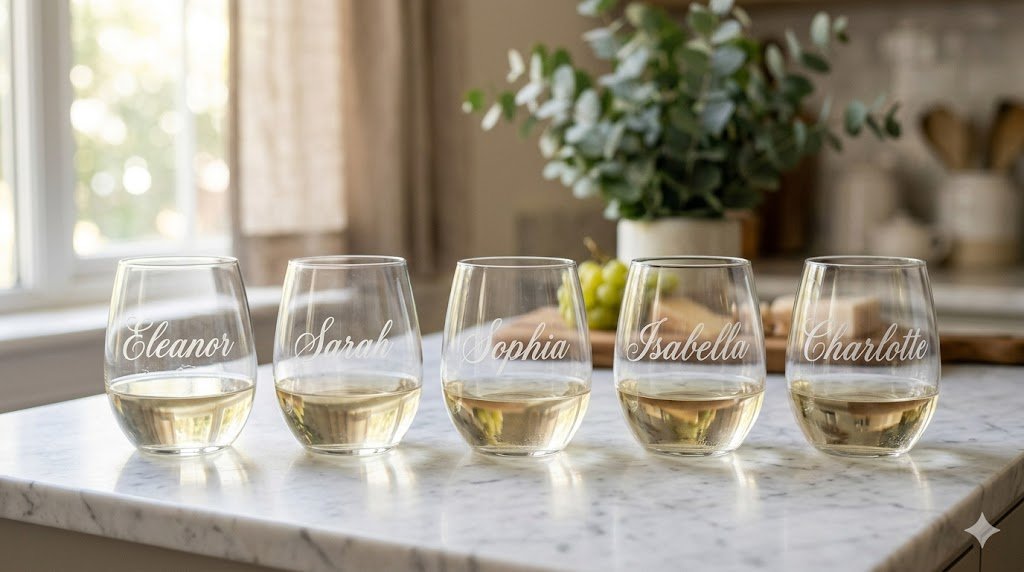
    Five personalized stemless wine glasses with etched names

    The Bridal Gift Problem

    When we talk to brides after the wedding, a recurring theme emerges. The robe everyone wore for getting-ready photos got worn maybe twice afterward. The matching jewelry went into the back of the jewelry box. The tote bag made one Target run and disappeared. None of these gifts were bad. They just weren’t designed for life after the wedding.

    Many couples find the gifts their bridesmaids still use a year later are the unglamorous ones — the practical, everyday objects that integrate into a normal evening at home.

    Why Wine Glasses Hit Different

    A personalized wine glass earns shelf space in a way most wedding gifts don’t. Almost every adult drinks something out of a glass on a regular basis. Personalize that glass with a name, a wedding date, or an inside joke, and it stops being generic barware and starts being a small recurring reminder of the friendship behind the wedding.

    A few reasons the format works:

    • Frequent use. Even casual wine drinkers reach for a glass most weeks.
    • Display value. It looks good in a cabinet when it’s not being used.
    • Easy to personalize meaningfully. A name, a date, a short phrase, or even individual bridesmaid titles read well at this scale.
    • Travel and entertaining friendly. It comes out when friends come over, which keeps the wedding memory in active rotation.

    Stemmed, Stemless, or Both?

    The format decision matters more than it might seem. A quick breakdown:

    • Stemmed glasses feel more elegant and read as “the nice glassware.” They’re better for display and for formal occasions.
    • Stemless glasses are more durable, easier to wash, and get used more often because they feel less precious.
    • Champagne flutes or coupes make a strong statement piece, especially if you want to nod to the wedding toast.

    A growing number of brides give a small set — say, a stemless for everyday and a flute for the toast — rather than a single glass. The cost difference is modest and the gift feels more complete.

  • Laser etching vs. UV printing: which lasts on commercial glassware

    Laser etching vs. UV printing: which lasts on commercial glassware

    The etching on the side of a custom wine glass is not a sticker, a print, or a coating. It is permanently fused into the glass surface using a focused CO2 laser. Here is what that actually means for durability, design, and cost.

    How laser etching actually works

    A CO2 laser tuned to 10.6μm wavelength heats the surface of the glass to its melting point in a precisely controlled pattern. The glass surface fractures at the microscopic level, creating a frosted appearance where the laser passes. The pattern is permanent because it is literally part of the glass molecular structure — not a coating that can wear off.

    Etching vs. printing vs. screen-printing

    UV print: A colored ink layer cured onto the glass with ultraviolet light. Looks great on day one but degrades visibly after 150-300 dishwasher cycles. Best for one-off events.

    Screen print: A ceramic ink fired onto the glass at high temperature. More durable than UV print, lasts 500-800 cycles, but limited to a few colors and shapes.

    Laser etch: Permanent fracture pattern, monochromatic frosted appearance. Survives 1,500+ cycles. The right choice for any restaurant or hotel commercial-service application.

    Design considerations specific to etching

    Etching produces a single-tone frosted appearance — there is no color and no gradient. Designs that depend on color contrast or photographic detail do not translate. The strongest designs use bold linework, clear typography, and either fully-filled shapes or fully-outlined shapes.

    Our designers commonly redraw customer logos to optimize for etching before production. The change is usually invisible — bolder strokes, slight letter-spacing increase, and elimination of micro-detail that would not survive the laser pass.

    Where the etching goes on the glass

    Standard placement is the lower third of the bowl, centered, sized to be readable when the glass is half-filled. For taller stems (Champagne flutes) we move the etching to the mid-bowl. For stemless glasses the etching wraps the lower fifth so it reads from any angle on the table.

  • How to build a high-margin wine program around custom glassware

    How to build a high-margin wine program around custom glassware

    Restaurants that treat wine service as a brand asset — not just a beverage category — see by-the-glass attach rates rise from 22% to 40-50% over the first 12 months. Branded glassware is the lowest-cost lever for getting there. Here is the operational math.

    Why wine service is the highest-margin category on the menu

    A bottle of wine that costs the restaurant $14 pours five 5-ounce glasses, sold at $14-18 each. That is $70-90 in revenue against $14 in COGS — a 75-85% gross margin, before the labor and breakage allowance. Compare that to entrée margins (typically 65-72%) and you can see why operators who can move their guests up the wine list win on EBITDA.

    The bottleneck is rarely the wine itself. It is the guest perception of the wine program. If the BTG list arrives in a generic glass next to a $30 entrée, the guest reads “this restaurant does not take wine seriously” and orders water.

    The glassware as program-signal

    Etched, restaurant-branded glassware does two things. First, it signals investment — guests register that the restaurant cared enough to commission proprietary stemware. Second, it raises the perceived quality of every wine in the program by association, including the by-the-glass list.

    The data from our restaurant clients: typical BTG attach rate before launching branded glassware sits at 22-28%. After 12 months on etched-branded glassware, the same restaurants run 38-46%. The change is not from the glass — it is from the program-level signaling.

    Operational details that actually matter

    Survive the dishwasher. Most restaurants run four dishwasher cycles per glass per night. Over a year that is 1,400+ cycles. Printed glassware fades by cycle 200. Etched glassware lasts 1,500+ cycles.

    Match the bowl to the program. A 14oz universal Bordeaux works for 90% of BTG programs and reduces SKU complexity. If your program is white-focused, swap to a 12oz tulip.

    Budget for breakage. Industry-standard breakage is 8-12% per quarter. We lock 12-month pricing tiers so reorders ship at the same per-glass cost as the original order.

  • The true cost of branded wine glasses: a margin guide

    The true cost of branded wine glasses: a margin guide

    A custom-etched wine glass costs $3.05 to $8.50 per unit depending on quantity. A guest sees that glass for 45 minutes during a meal. Here is how the per-glass economics translate to real branding value — and where the math breaks down.

    The per-unit cost ladder

    Our pricing tiers reflect actual production-line economics. At 25-99 glasses we run a single short production line. At 250-499 we batch with two complementary orders to amortize setup. At 500+ we run a dedicated line and pricing reflects the efficiency.

    • 25-99 glasses: $8.50 per glass
    • 100-249 glasses: $6.60 per glass
    • 250-499 glasses: $5.10 per glass
    • 500-999 glasses: $4.10 per glass
    • 1,000+ glasses: $3.05 per glass

    Restaurant math

    For a 60-cover restaurant running 4 BTG pours per cover per night, you need approximately 240 glasses on the active rack plus 30% for dishwasher rotation and breakage allowance — a working inventory of around 320 glasses.

    At Tier 2 pricing ($5.10/glass) the inventory cost is $1,632. Amortized across 200 service nights per year and 240 BTG pours per night (48,000 pours), the per-pour glassware cost is $0.034. Three and a half cents per pour to put your brand directly in the guest hand.

    Wedding math

    A 150-guest wedding using etched glasses as both the dinner service and the favor runs at Tier 3 ($4.40/glass average for a 150-glass order). Total: $660. Comparable wedding favors run $4-8 per guest with a 22% take-home rate. The wine glass costs the same and has a 94% take-home rate.

    Where the math breaks

    Promotional gifting for low-touch relationships (mass mailings, trade-show giveaways) is where wine glass economics stop making sense. The presentation cost (gift box, sleeve, individual shipping) often exceeds the glass cost. For these use cases, branded pens or notebooks remain the right call.

  • Hello world!

    Welcome to WordPress. This is your first post. Edit or delete it, then start writing!