Wedding Toasting Glasses: Flutes, Coupes & Personalization
Of all the glassware at a wedding, only two pieces make it into the photo album, the highlight reel, and — decades later — the anniversary table. Choosing wedding toasting glasses is one of those small decisions that quietly outlasts most of the big ones: the couple will hold these glasses during the most photographed ninety seconds of the reception, and many will drink from them every anniversary after. This guide covers where the toasting tradition comes from, how to choose between flutes and coupes, what personalization options exist, and when to order so the glasses arrive engraved, proofed, and ready for the big day.
A Short History of the Wedding Toast
The toast predates the glassware. Raising a cup to health and fortune runs back through medieval banquet culture, and the dedicated wedding toasting glass emerged as couples began keeping a marked pair from the celebration — a tradition that grew teeth in the nineteenth century when etched and engraved glass became affordable enough for middle-class weddings. The modern version of the ritual is remarkably stable: the couple’s glasses are distinct from every other glass in the room, they are used for the first toast, and they go home with the couple as the first heirloom of the marriage. That last part is why the choice deserves more thought than the rental stemware does.
Flute, Coupe, or Trumpet: Choosing the Shape
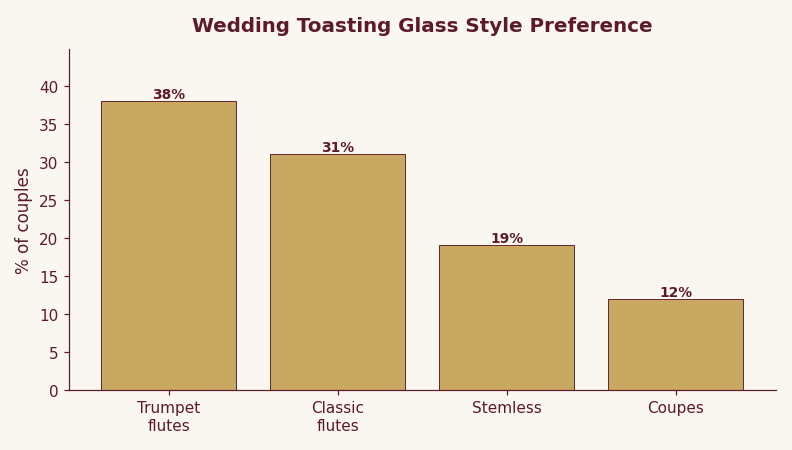
Three silhouettes dominate the toasting-glass market, and each carries a different personality on camera and in hand.
The Flute
Tall, narrow, and engineered for sparkle: the flute’s small surface area preserves carbonation, so the champagne is still lively when the speeches run long. Its height also makes it the most photogenic shape in a clinking shot. If the couple wants the classic look — and most do — the flute is the default for a reason.
The Coupe
The coupe is the vintage romantic of the family — broad, shallow, Gatsby-coded. It loses bubbles quickly, which purists count against it, but for couples running a retro or garden-party aesthetic the silhouette is unbeatable. Coupes also engrave beautifully: the wide bowl gives the monogram room to breathe.
The Trumpet
Trumpet flutes flare from a narrow stem into a wider rim, splitting the difference — modern, sculptural, and popular in black-tie receptions. They tend to run taller and heavier, which reads as luxurious in hand but demands more care in transport.
| Shape | Best for | Bubble retention | Engraving canvas |
|---|---|---|---|
| Flute | Classic receptions, long speeches | Excellent | Narrow — best for dates & names |
| Coupe | Vintage & garden themes | Fair | Wide — ideal for monograms |
| Trumpet | Black-tie, modern venues | Good | Generous mid-bowl surface |
| Stemless | Outdoor & casual weddings | Good | Large wraparound area |
Personalization: Making the Pair Unmistakably Theirs
Personalization is what separates toasting glasses from the caterer’s stemware, and the options range from restrained to fully bespoke.
Names & Wedding Date
The timeless choice: first names and the date, etched in a script or serif face. On flutes, this runs vertically or in a small arc; on coupes, it sits centered on the bowl. It photographs cleanly and never dates itself.
Monograms & Crests
A shared-surname monogram — or a newly designed family crest — gives the pair an heirloom quality from day one. Interlocking-letter designs suit coupes and trumpets; single-letter marks suit flutes.
Roles & Phrases
“Mr.” and “Mrs.”, “Better” and “Half”, a line from the vows, or the couple’s shared joke. Short phrases work best: etching rewards restraint, and three words at a readable size beat a paragraph nobody can make out.
Deep Etch & Gilded Accents
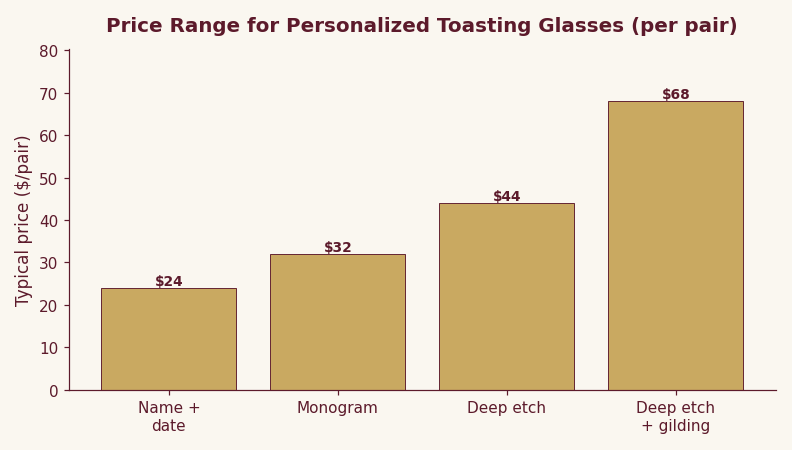
Beyond surface etching, deep-carve engraving adds shadow and dimension, and gold or silver rim gilding turns the pair into true display pieces. These finishing touches typically add $15–$30 per pair and photograph spectacularly in candlelight.
Practical Details Couples Ask About
- Should the pair match the reception stemware? No — contrast is the point. The toasting pair should read as distinct in photos.
- Etching or printing? Etching. It is permanent, dishwasher-resilient, and feels engraved because it is. Printed designs on keepsake glassware tend to wear within a few years of anniversary use.
- What about the wedding party? Many couples extend the theme with engraved glasses for the bridal party — a natural companion order, and one we cover in our bridal party gift guide on the blog.
- One pair or two? Consider a backup pair if the venue handles the glasses overnight. At typical price points, insurance is cheap.
An Heirloom, Not an Accessory
The best wedding toasting glasses are chosen the way the rings were: as objects that will still mean something at the twenty-fifth anniversary. Pick the shape that fits the couple, keep the engraving legible and personal, and order early enough to enjoy the proofing process rather than race it. Years from now, when the pair comes out of the cabinet each anniversary, the ninety seconds they were first raised will come back with them.
You can read more about our etching process on the about page, browse the full custom glassware collection, or contact us with a design idea. And if you are also outfitting the venue side of an event, our companion guide to restaurant wine glasses and replacement math looks at durability from the professional angle.
Two glasses. One toast. Every anniversary after.
Engraved toasting flutes and coupes, proofed before etching and delivered weeks ahead of the date.
Leave a Reply